
Ring Styles
The Tension Setting, Explained Properly
The diamond looks like it's held by nothing at all. Here's the actual engineering behind that effect, and what to know before choosing one.
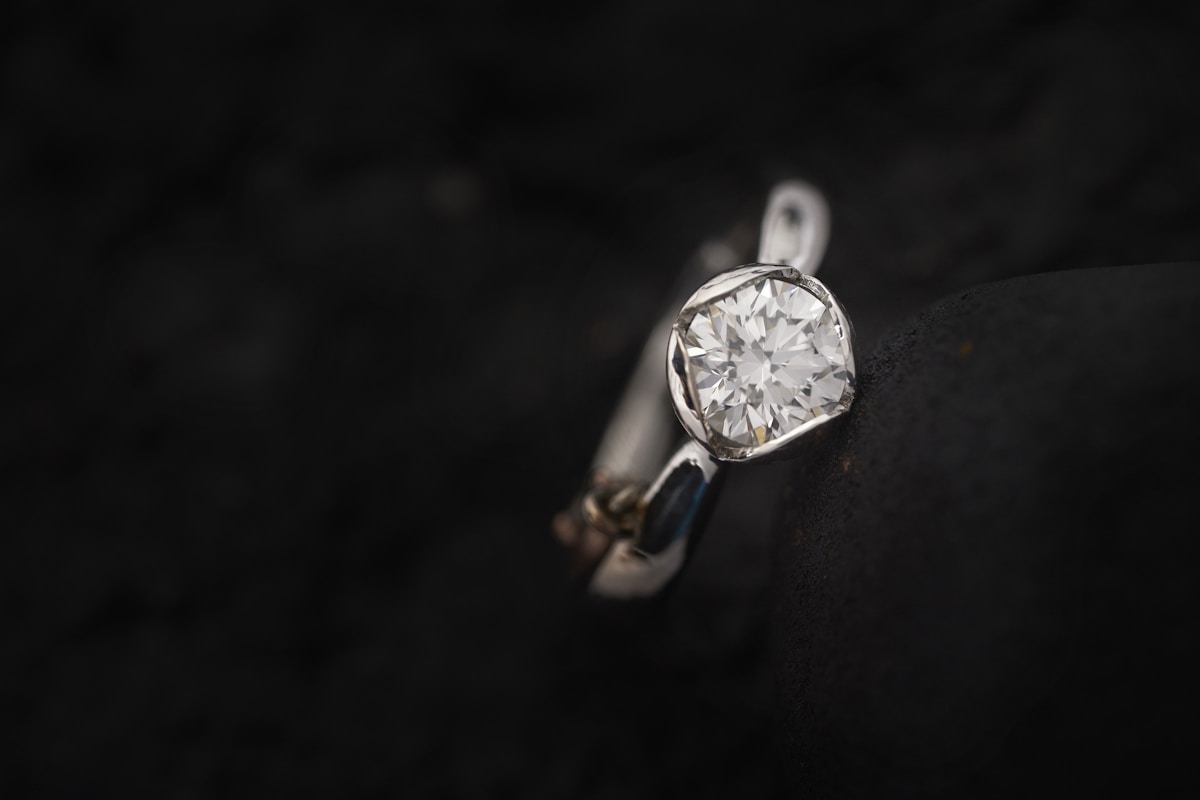
The physics behind the 'floating' look
A tension setting works by precisely engineering the two ends of the band to grip the stone under real mechanical tension — the metal itself is machined to hold the diamond by pressure alone, with tiny grooves cut into the stone's girdle for the metal to seat into securely. There's no traditional prong doing the holding; the tension is the setting.
Why it requires more precise fabrication
Because the security of the stone depends entirely on exact tension rather than the more forgiving mechanics of prongs, a tension-set ring has less margin for error in fabrication than most styles. This is a setting where the maker's precision genuinely matters more than usual — worth asking directly about a jeweler's experience with this specific technique.
Is it actually as secure as it looks fragile?
Yes, when made correctly — the tension mechanism is engineered specifically to hold the stone firmly under normal wear. That said, resizing a tension-set ring is more involved than a standard band, since the tension itself has to be recalibrated rather than simply cutting and resoldering metal — worth knowing if your ring size might change over time.
Which stones and shapes work best
Round and princess cuts are the most common choices for tension settings, since their geometry distributes pressure evenly around the girdle. Elongated shapes are technically possible but require more careful engineering to avoid uneven pressure points.
The visual payoff
Because there are no prongs covering the sides of the stone, a tension setting lets more light enter and exit the diamond from angles a pronged setting would partially block — a genuine brilliance advantage on top of the striking visual effect.
Who this setting actually suits
This style rewards someone drawn to modern, architectural design over a traditional silhouette — it reads as distinctly different from any other ring in the room. It's a style choice as much as a technical one, and worth discussing directly with your designer if the look appeals to you.