
Care
When (and How) to Resize Your Ring
Fingers change size for real reasons. Here's how to know it's time, what the process involves, and what can't be resized.
The obvious sign: it spins or slides
If your ring rotates freely on your finger or slides toward the knuckle without effort, it's too loose — beyond the annoyance, a loose ring is far more likely to be lost.
The less obvious sign: it leaves a mark or feels tight
A ring that leaves an indentation, is hard to remove, or causes your finger to swell slightly by end of day is too tight — this isn't just discomfort, prolonged tightness can affect circulation.
Common reasons fingers change size
Weight change, temperature (fingers swell in heat, shrink in cold — always size at room temperature), pregnancy, and simply aging are all normal, common causes. It's not a sign anything is wrong with the ring.
Most rings can be resized 1–2 sizes
A simple band can typically be resized without visible impact. Rings with more complex designs — full eternity bands, certain pavé patterns that wrap the whole shank — are harder or sometimes impossible to resize without redesigning the piece, since the stones themselves occupy the metal being adjusted.
What the process involves
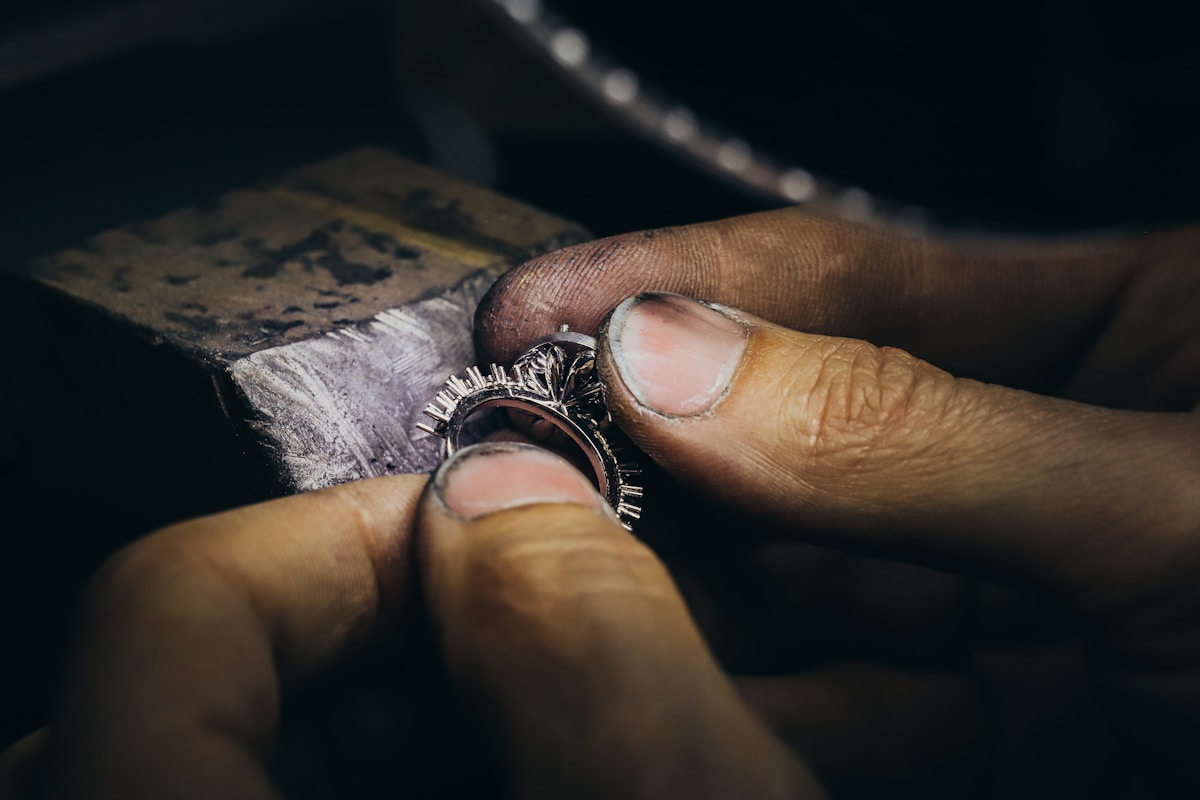
For a straightforward resize, the band is cut, metal is added or removed, and it's reshaped and polished — typically a few days to a week. We'll tell you honestly at drop-off whether your specific design is a simple or complex resize.
When we recommend against it
If a ring has been resized multiple times already, the metal can weaken at the seam. In rare cases, we'll recommend a rebuild instead of another resize — we'll always tell you which option makes more sense before doing either.