Process
How the 48-Hour CAD Design Actually Works
A 3D file you can barely read isn't reassuring. Here's what a real CAD render looks like, how to review one, and why 48 hours is the number.
What a CAD render actually is
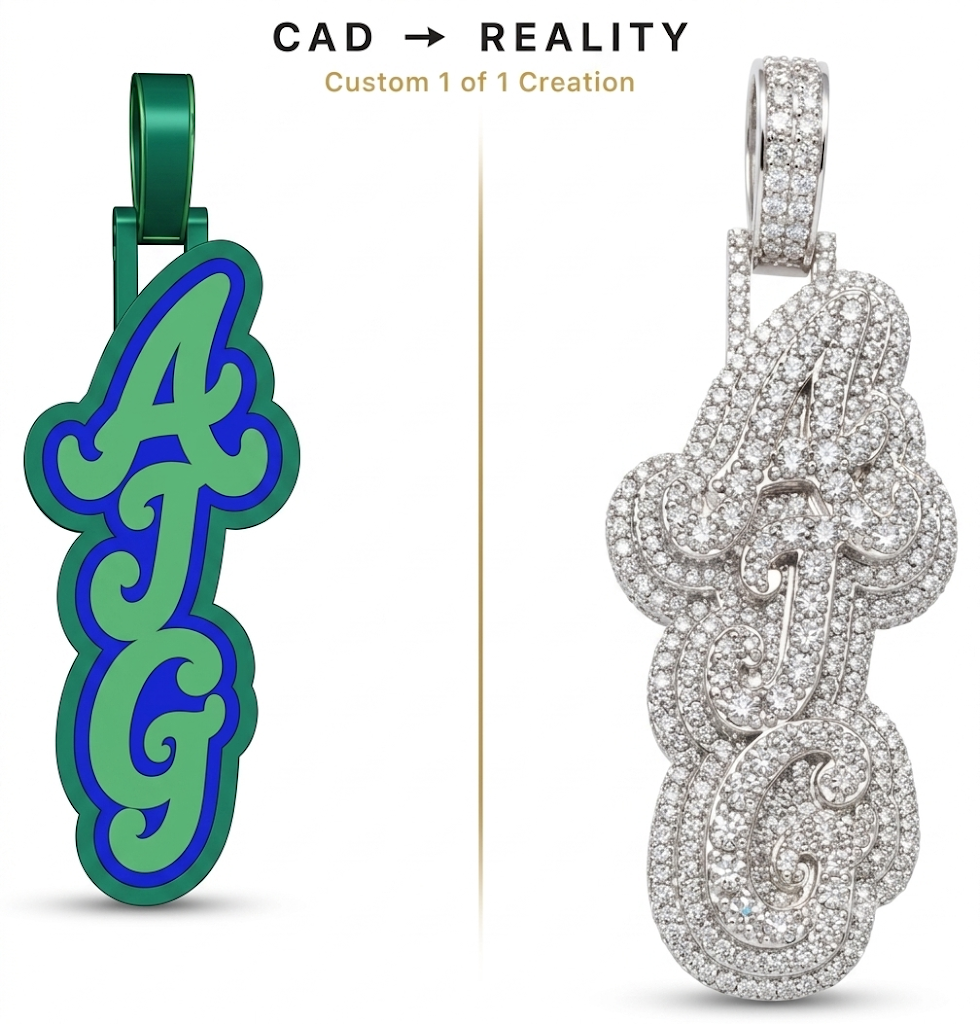
CAD stands for computer-aided design — in practice, it's a precise 3D model of your exact piece, built to true proportions and dimensions, not a sketch or an approximation. You can view it rotated from any angle, zoomed into any detail, before a single piece of metal is cut or cast.
Why 48 hours specifically
That timeline reflects how long it genuinely takes to translate an approved concept into an accurate 3D file — modeling the exact stone dimensions, prong geometry, and band proportions correctly the first time is faster than rushing a rough version and needing three rounds of fixes. It's a deliberate pace, not an arbitrary promise.
What you'll actually receive
A set of rendered images from multiple angles — front, side, top, and a close-up of the setting — along with the true carat weight, metal weight, and dimensions. Some pieces also come with a short rotating video render for a fuller sense of how it will look on the hand.
How to actually review a CAD render
Look at proportions relative to a hand, not just the piece in isolation — a setting can look perfect in isolation and slightly off in scale once worn. Check prong height and stone orientation from the side view specifically, since these details are easy to miss from the front. Don't hesitate to ask for a specific angle if something isn't clear; that's a normal part of the review, not an inconvenience.
What happens when you request a change
Adjustments at the CAD stage — a different band width, a taller setting, a slightly larger stone — are quick to make and don't restart the clock in any meaningful way, since the file is still fully digital. This is exactly why this step exists: changes here are essentially free; changes after production has started are not.
The real value of this step
The CAD stage is what removes the single biggest source of anxiety in custom jewelry — not knowing what you're going to get until it arrives. By the time production starts, you've already seen and approved the exact piece, at true scale, from every angle.